Ray-Ban: 7 Things Worth Knowing About the Brand
Ray-Ban is one of the few eyewear names that most people can identify on sight, even without knowing the brand’s full history. That recognition comes from decades of consistent frame design rather than constant reinvention, which is part of why the brand still holds a strong spot in a crowded eyewear market.
This guide covers where Ray-Ban comes from, what the current product range actually includes, how to spot an authentic pair, and a few habits worth knowing before you buy or wear a pair regularly.
Table of Contents
- A Brief Look at Ray-Ban’s History
- What the Ray-Ban Product Range Includes Today
- How to Spot an Authentic Ray-Ban Pair
- Where to Buy Ray-Ban Without Overpaying
- Warranty and Repair Basics
- Sunglasses Safety Habits Worth Knowing
A Brief Look at Ray-Ban’s History
Ray-Ban’s frame designs trace back to functional eyewear developed for specific jobs, which is part of why some shapes still feel purposeful rather than purely decorative.
- The brand’s roots are in functional eyewear, with some of its most famous shapes originally developed to solve specific vision problems rather than to follow fashion trends.
- Frame shapes have stayed remarkably consistent, with silhouettes introduced decades ago still forming the core of the current lineup.
- Ownership has changed over the years, with the brand now part of a larger eyewear group that also produces other well-known labels.
- Pop culture exposure has kept the brand visible, with certain frame shapes repeatedly appearing in film and fashion over multiple decades.
What the Ray-Ban Product Range Includes Today
Ray-Ban today covers more than just sunglasses, spanning several distinct product categories.
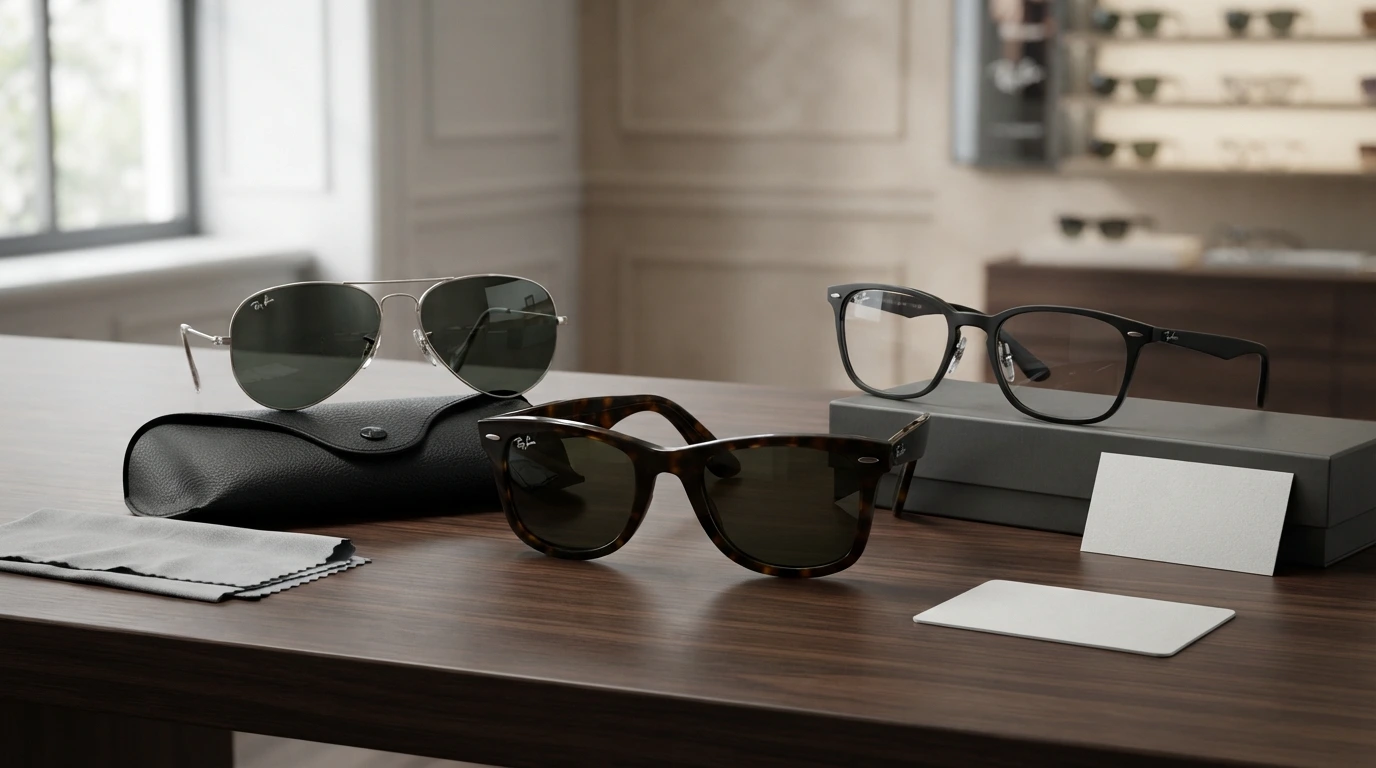
- Classic sunglasses remain the core category, built around the brand’s most recognized frame shapes and a range of lens tints.
- Optical frames support prescription eyewear, using the same frame shapes but designed for clear prescription lenses rather than tinted ones.
- Smart glasses have joined the lineup, with Ray-Ban Meta glasses building a camera, audio, and voice assistant features into familiar frame designs.
- Accessories round out the range, including cases, cleaning kits, and replacement parts for existing frames.
How to Spot an Authentic Ray-Ban Pair
Counterfeit sunglasses are common enough in the market that a few basic checks are worth doing before buying, especially from third-party sellers.
- Check the etching on the lens, since authentic pairs typically include a small logo etched into one of the lenses, not just printed on a sticker.
- Look at the packaging and paperwork, as authentic pairs generally come with a properly printed case, cleaning cloth, and authenticity card.
- Buy from authorized retailers when possible, since heavily discounted listings from unfamiliar sellers are a common red flag for counterfeits.
- Compare weight and finish to known authentic photos, since counterfeit frames often use lighter materials or slightly different proportions.
Where to Buy Ray-Ban Without Overpaying
Prices for the same frame can vary noticeably depending on where you shop, so it’s worth comparing a few sources before buying.
- Optical retailers often run seasonal promotions, which can bring prices down without resorting to third-party marketplaces.
- Buying directly from the brand guarantees authenticity, though it may not always be the cheapest option compared to authorized retail partners.
- Marketplace listings need extra scrutiny, since counterfeit risk is higher outside of recognized authorized sellers.
Warranty and Repair Basics
Most Ray-Ban frames come with some form of manufacturer warranty against defects, though coverage details vary by retailer and region.
- Keep your receipt and packaging, since proof of purchase is typically required for warranty claims.
- Minor repairs are often available through opticians, including hinge tightening and nose pad replacement, without needing a full warranty claim.
- Check return policies before buying online, since frame fit is hard to judge without trying a pair on in person.
Sunglasses Safety Habits Worth Knowing
Whichever Ray-Ban style you choose, a few sun-safety basics apply across the board.
- Confirm UV protection before buying, since a dark tint alone doesn’t guarantee the lenses block ultraviolet light.
- Avoid unverified third-party sellers for sun protection claims, since counterfeit lenses may not offer the UV protection they claim.
The American Academy of Ophthalmology recommends looking for a label confirming 100% UV protection, or UV absorption up to 400nm, since either confirms the lenses block the ultraviolet light linked to long-term eye damage.
Frequently Asked Questions
Is Ray-Ban owned by an independent company?
Ray-Ban is part of a larger eyewear group that owns several other well-known eyewear brands, rather than operating as a fully independent company.
How can I tell if my Ray-Ban glasses are real?
Checking the lens etching, packaging quality, and purchase source are the most reliable basic checks, though an optician can also verify authenticity if you’re unsure.
Does Ray-Ban make prescription glasses, not just sunglasses?
Yes, Ray-Ban’s optical frame lineup is built specifically for prescription lenses, separate from its tinted sunglass frames.
Are Ray-Ban Meta glasses part of the main Ray-Ban lineup?
Yes, they’re a distinct product line built in partnership with Meta, using Ray-Ban frame designs with added camera and audio features.
Do all Ray-Ban sunglasses come with a warranty?
Most do, though exact terms can vary by retailer and region, so it’s worth checking the specific warranty details at the point of purchase.
Conclusion
Ray-Ban’s staying power comes down to a handful of frame shapes that have held up for decades, paired with a product range that now stretches from classic sunglasses to prescription optical frames and smart glasses. Whichever category you’re shopping in, buying from a reputable source and confirming real UV protection will do more for the value of your purchase than the brand name alone.