
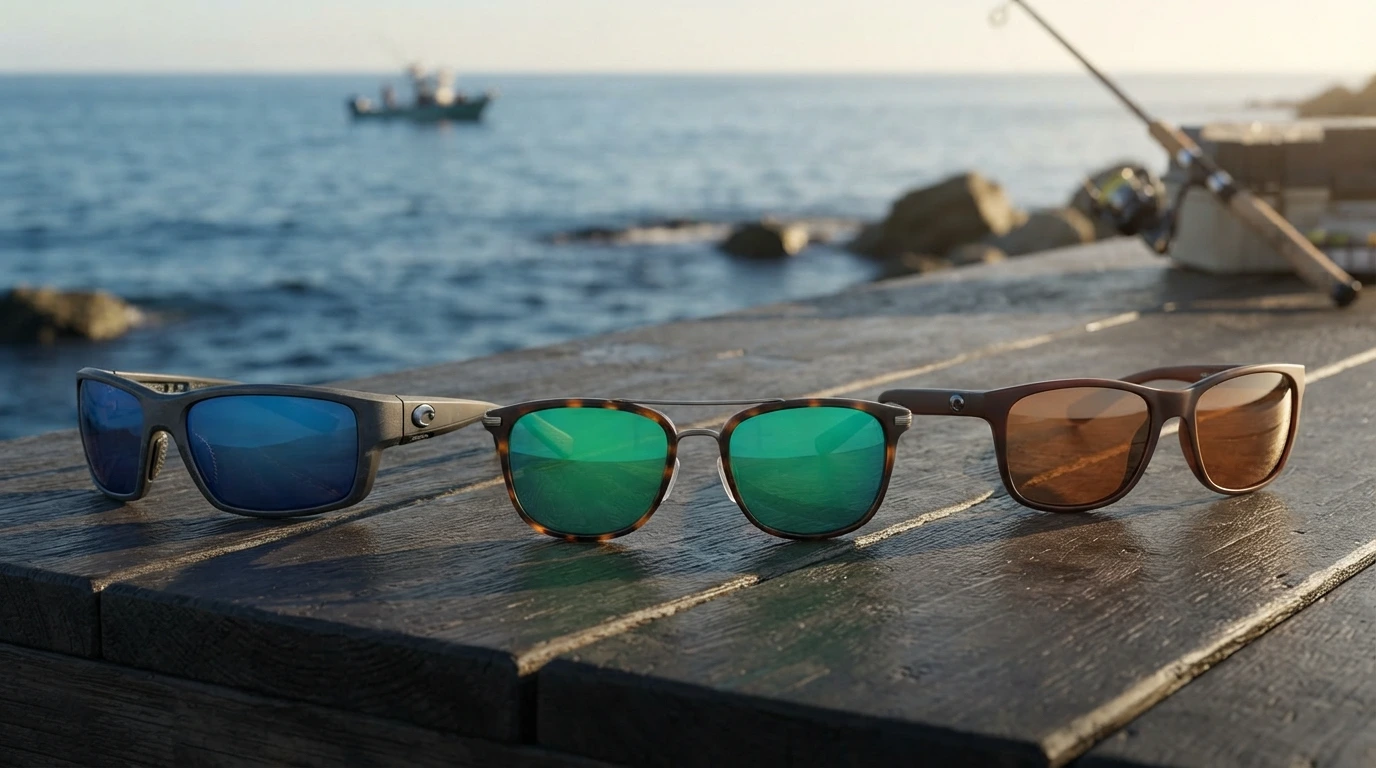
Costa Del Mar Sunglasses: 4 Things Worth Knowing
Costa Del Mar Sunglasses cover a wide range of frame shapes and lens tints, which can make choosing a pair more complicated than it needs to be if you’re not sure what the different options are actually for. Most of the decision comes down to matching lens tint and frame shape to how and where you’ll actually wear them.
This guide covers how Costa Del Mar Sunglasses lens tints differ, what frame styles are available, fit considerations, and a few care and safety habits worth knowing before you buy.
Table of Contents
- Understanding Costa’s Lens Tint Options
- Frame Styles Available
- Glass vs. Polycarbonate Lenses
- Getting the Right Fit
- Prescription Options
- Sunglasses Safety Habits Worth Knowing
Understanding Costa’s Lens Tint Options
Costa offers several lens tints, each marketed toward slightly different lighting and water conditions.
- Blue mirror tints are generally marketed toward bright, sunny days on deep blue water, cutting glare while maintaining contrast.
- Green mirror tints are often positioned as an all-around option for a range of lighting conditions.
- Copper and amber-based tints are frequently recommended for flatter, shallower water where enhanced contrast helps with sight-fishing.
- Gray-based tints tend to preserve more natural color perception, which some people prefer for everyday, non-water use.
Frame Styles Available
Costa’s frame range spans from performance-oriented wraparound shapes to more casual, everyday styles.
- Wraparound and sport frames are common in the performance lineup, offering more peripheral coverage against glare.
- Classic and lifestyle shapes are also available, aimed at people who want the brand’s lens technology without a heavily sport-oriented look.
- Frame materials vary by model, with lightweight nylon and more traditional acetate both represented across the lineup.
Glass vs. Polycarbonate Lenses
Costa offers both glass and polycarbonate lens options, and the right choice depends on your priorities.
- Glass lenses generally offer more scratch resistance and are often described as delivering sharper optical clarity, at the cost of added weight.
- Polycarbonate lenses are lighter and more impact-resistant, which some people prefer for long days of active wear.
- Neither option changes the core polarization technology, so the choice mainly comes down to weight, durability, and personal preference.
Getting the Right Fit
Fit affects both comfort and how well the sunglasses actually block glare from the sides.
- Wraparound shapes generally offer more peripheral glare protection, which matters more for water and driving use than for everyday errands.
- Check temple length and nose bridge width, since these measurements affect comfort more than overall frame width alone.
- Trying frames on in person when possible remains the most reliable way to judge fit and how a given tint looks against your skin tone.
Prescription Options
Costa Del Mar sunglasses are available with prescription lenses for people who need vision correction along with sun protection.
- Prescription orders generally go through an optician, who fits your prescription to a compatible Costa frame.
- Not every frame shape may support every prescription strength, particularly for more heavily curved or wraparound styles.
- Lead times run longer than off-the-shelf frames, since lenses need to be custom-ground and fitted.
Sunglasses Safety Habits Worth Knowing
Whichever tint or frame you choose, the same basic sun-safety habits apply.
- Confirm UV protection before buying, since polarization and UV blocking are separate features.
- Rinse off saltwater promptly, since it can degrade certain frame materials and coatings if left to dry on the lens or hinge.
The American Academy of Ophthalmology recommends looking for a label confirming 100% UV protection, or UV absorption up to 400nm, since either confirms the lenses block the ultraviolet light linked to long-term eye damage.
Frequently Asked Questions
Which Costa lens tint is best for everyday use?
Gray-based tints are often recommended for everyday use since they tend to preserve natural color perception, though personal preference plays a role too.
Are Costa Del Mar sunglasses only good for fishing?
No, while the brand is well known in fishing circles, its lifestyle and everyday frame styles are designed for general use as well.
What’s the benefit of glass lenses over polycarbonate?
Glass lenses generally offer more scratch resistance and sharper optical clarity, while polycarbonate is lighter and more impact-resistant.
Can I get prescription lenses in any Costa Del Mar frame?
Not necessarily; heavily curved or wraparound shapes can have more limitations on prescription strength, so it’s worth checking with an optician first.
Do Costa Del Mar sunglasses come in non-mirrored lens options?
Yes, mirrored coatings are common but not universal, and several tints are available without a mirror finish.
Conclusion
Costa Del Mar sunglasses offer enough variety in lens tint, frame shape, and lens material that the right choice really depends on how and where you plan to wear them. Whether you land on a performance fishing frame or a more casual everyday style, confirming real UV protection and getting the fit right in person will matter more to how the sunglasses perform than the tint color alone.

One Comment