Costa Del Mar: 7 Things Worth Knowing About the Brand
Costa Del Mar built its name in the fishing and boating community long before it became a broader lifestyle sunglasses brand, and that heritage still shapes how the company designs and markets its eyewear. If you’ve ever heard an angler swear by a specific lens tint, there’s a decent chance Costa was the brand behind it.
This guide covers where Costa Del Mar comes from, what actually sets its lens technology apart, how the product range breaks down, and a few practical things worth knowing about warranty and care before you buy.
Table of Contents
- Where Costa Del Mar Comes From
- What Sets Costa’s Lens Technology Apart
- How the Product Range Breaks Down
- Warranty Coverage in Brief
- Where to Buy Costa Del Mar
- Sunglasses Safety Habits Worth Knowing
Where Costa Del Mar Comes From
Costa Del Mar’s identity is tied closely to water-based activities, particularly fishing, which shaped its early product decisions.
- The brand grew out of the fishing community, with early designs aimed specifically at anglers who needed to see through glare on the water.
- Florida roots still inform the brand’s marketing, leaning into a coastal, outdoor lifestyle image alongside its performance claims.
- The company is now part of a larger eyewear group, which also owns several other well-known eyewear brands sold internationally.
- Sponsorships and partnerships with anglers and guides remain a visible part of how the brand builds credibility in its core market.
What Sets Costa’s Lens Technology Apart
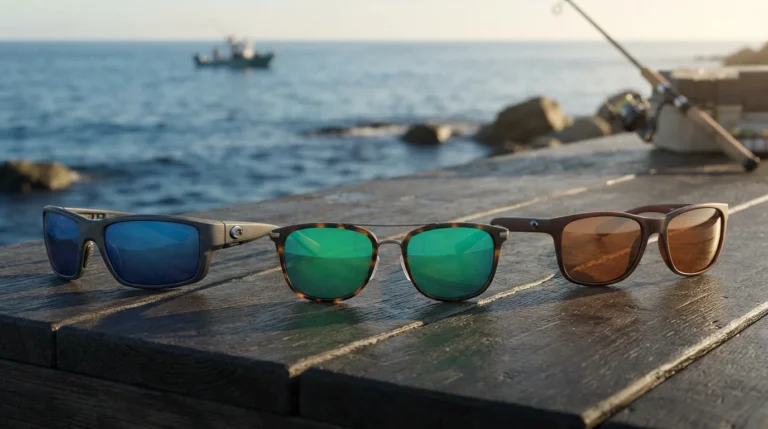
Costa markets its lenses heavily around sight-fishing performance, where seeing beneath the water’s surface matters as much as basic glare reduction.
- Polarization is standard across the lineup, cutting down on the horizontal glare that makes it hard to see beneath the water’s surface.
- Multiple lens tints are offered for different conditions, with different colors marketed toward flat calm water, deeper blue water, or bright overhead sun.
- Both glass and polycarbonate lens options are available, with glass generally offering more scratch resistance and polycarbonate offering lighter weight.
- Mirror coatings are common on many models, adding an extra layer of glare reduction on top of the base polarized tint.
How the Product Range Breaks Down
Costa’s current lineup covers more ground than just performance fishing sunglasses.
- Performance and fishing-focused frames make up a large part of the catalog, often with wraparound styles built for time on the water.
- Lifestyle and everyday frames are also offered, aimed at people who want the brand’s lens technology in a more casual, everyday-wearable shape.
- Prescription sunglasses and optical frames extend the lineup to people who need vision correction alongside sun protection.
- Accessories such as retainer straps and cases round out the range, particularly useful for on-the-water use.
Warranty Coverage in Brief
Costa Del Mar backs its sunglasses with a warranty against manufacturing defects, though exact terms depend on when and what you purchased.
- Manufacturing defects are generally covered, with Costa repairing or replacing eligible products at its discretion.
- Coverage terms have changed over time, so it’s worth checking the current warranty terms on Costa’s site for your specific purchase date and product type.
- Normal wear and tear isn’t covered, which includes things like scratched lenses from regular use, broken hinges from accidents, or lost sunglasses.
Where to Buy Costa Del Mar
Costa is sold through a mix of channels, and where you buy can affect pricing, warranty registration, and return options.
- Authorized optical and sporting goods retailers are a common source, often with in-person try-on available.
- Buying directly from Costa simplifies warranty registration and customer support if something goes wrong later.
- Third-party marketplace listings need extra scrutiny, since counterfeit risk and warranty complications are more likely outside authorized channels.
Sunglasses Safety Habits Worth Knowing
Whichever Costa style you choose, the same basic sun-safety habits apply as with any pair of sunglasses.
- Confirm UV protection before buying, since polarization and UV blocking are separate features that should both be present.
- Don’t judge protection by tint darkness, since very dark lenses without proper UV coatings can be worse for your eyes than lighter ones.
The American Academy of Ophthalmology recommends looking for a label confirming 100% UV protection, or UV absorption up to 400nm, since either confirms the lenses block the ultraviolet light linked to long-term eye damage.
Frequently Asked Questions
Is Costa Del Mar mainly for fishing, or is it a general sunglasses brand?
The brand’s roots and much of its marketing are tied to fishing and boating, but its current lineup includes lifestyle and everyday frames as well.
Does Costa Del Mar make prescription sunglasses?
Yes, Costa offers prescription sunglasses and optical frames alongside its non-prescription lineup.
What’s the difference between Costa’s glass and polycarbonate lenses?
Glass lenses generally offer more scratch resistance, while polycarbonate lenses are lighter, so the right choice depends on your priorities for weight versus durability.
Is Costa Del Mar an independent company?
No, it’s part of a larger eyewear group that owns several other well-known eyewear brands.
Do all Costa sunglasses come with a warranty?
Costa backs its sunglasses against manufacturing defects, though exact terms vary by purchase date and product type, so it’s worth checking the current policy on Costa’s site.
Conclusion
Costa Del Mar’s reputation started with anglers who needed to see clearly through glare on the water, and that focus on lens performance still runs through the brand’s current lineup, from performance fishing frames to more casual everyday styles. Whichever category you’re shopping in, buying from an authorized source and confirming real UV protection will matter more to the long-term value of your purchase than the style alone.