
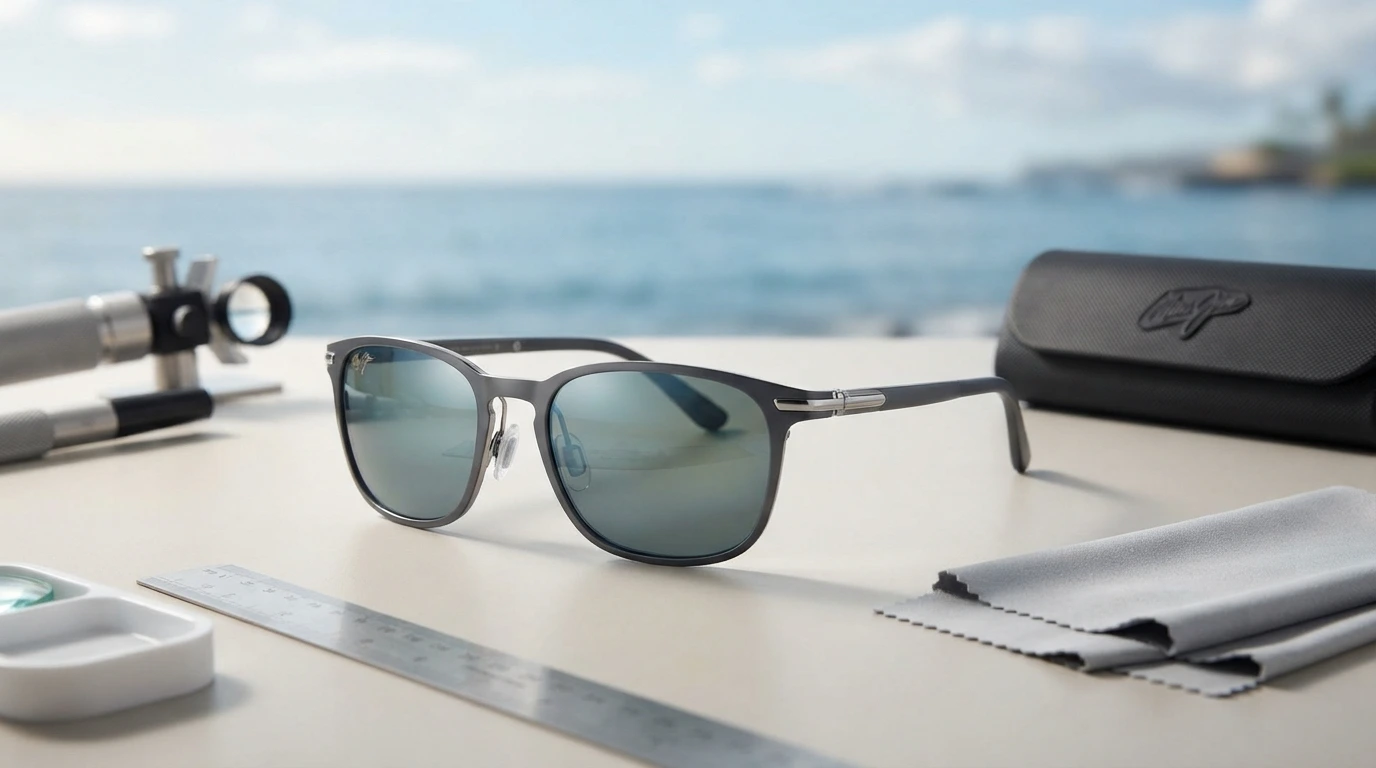
Maui Jim Prescription Sunglasses
Maui Jim prescription sunglasses combine the brand’s glare-reducing lens technology with lenses ground to your specific prescription, rather than asking you to choose between clear prescription glasses and non-prescription sunglasses. The process takes a bit more coordination than buying a pair off the shelf, but it’s a fairly established path for anyone who needs vision correction and wants real sun protection at the same time.
This guide covers how the fitting process generally works, which frame shapes tend to work best, lens options, and a few care and safety habits worth knowing before you order.
Table of Contents
- How the Fitting Process Generally Works
- Frame Shapes and Prescription Limits
- Lens Options to Ask About
- What to Expect on Cost and Lead Time
- Caring for Prescription Sunglasses
- Sunglasses Safety Habits Worth Knowing
How the Fitting Process Generally Works
Maui Jim Prescription Sunglasses require more coordination between your eye prescription and the physical frame than off-the-shelf sunglasses do.
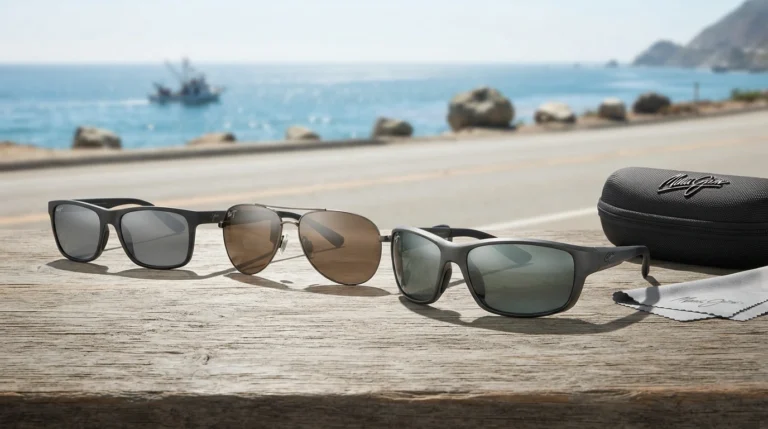
- An optician typically handles the order, taking your prescription and matching it to a compatible Maui Jim frame.
- Frame curvature affects lens grinding, since curved lenses need specialized lab work to avoid distortion at the edges.
- A trial fitting or measurement session is often part of the process, especially for frames with more pronounced curvature.
Frame Shapes and Prescription Limits
Not every Maui Jim frame is equally well suited to every prescription strength.
- Flatter, less curved frames generally accommodate a wider range of prescription strengths without distortion.
- Heavily wrapped or sport-style frames can have more limitations, particularly for strong prescriptions, due to the curvature needed for the wraparound look.
- An optician can advise on frame compatibility before you commit to a specific shape, which can save time compared to ordering and finding out afterward.
Lens Options to Ask About
A few lens-related questions are worth raising before finalizing an order.
- Polarization is generally retained in prescription versions, though it’s worth confirming for the specific frame and lens combination you’re ordering.
- Lens material choices affect thickness and weight, with higher-index lenses sometimes recommended for stronger prescriptions to keep the lens from looking too thick.
- Tint and coating options may be more limited for prescription lenses compared to the full non-prescription lineup, so it’s worth asking what’s available for your chosen frame.
What to Expect on Cost and Lead Time
Prescription sunglasses generally cost more and take longer to arrive than non-prescription pairs.
- Lens grinding adds to the base frame cost, with pricing generally scaling with prescription strength and lens material choice.
- Lead times run longer than off-the-shelf frames, since lenses need to be custom-ground and fitted rather than shipped ready to wear.
- Checking return and warranty policies before ordering is worth doing, since custom prescription lenses are often less flexible to return than non-prescription frames.
Caring for Prescription Sunglasses
The same basic care habits that apply to any sunglasses apply here, with a bit more reason to be careful given the added cost.
- Clean lenses with a microfiber cloth, avoiding paper towels or clothing that can leave fine scratches on coated lenses.
- Store frames in a hard case, since a lot of frame and hinge damage happens from being tossed loose into a bag.
- Get regular eye exams, since a prescription that’s out of date can mean your sunglasses no longer match your current vision needs.
Sunglasses Safety Habits Worth Knowing
The same basic sun-safety rules apply to Maui Jim Prescription Sunglasses as to any other pair.
- Confirm UV protection is included, since prescription lenses need the same UV coating as non-prescription lenses to protect your eyes.
- Don’t assume darker automatically means safer, since UV protection comes from the coating and material, not the tint level alone.
The American Academy of Ophthalmology recommends looking for a label confirming 100% UV protection, or UV absorption up to 400nm, since either confirms the lenses block the ultraviolet light linked to long-term eye damage.
Frequently Asked Questions
Can any Maui Jim Prescription Sunglasses frame be made into prescription sunglasses?
Not necessarily; heavily curved or wraparound shapes can have limits on the prescription strength they support, so it’s worth checking with an optician first.
Do Maui Jim prescription sunglasses keep the polarization feature?
Polarization is generally retained in prescription versions, though it’s worth confirming for your specific frame and lens combination.
How much longer does a prescription order take compared to non-prescription sunglasses? Lead times are generally longer since lenses need to be custom-ground and fitted, though exact timing varies by optician and lens complexity.
Will my prescription sunglasses look thicker than my regular glasses?
Lens thickness depends on your prescription strength and the lens material chosen; higher-index lens materials can help reduce thickness for stronger prescriptions.
Can I use my existing prescription for Maui Jim sunglasses?
Yes, as long as it’s current; it’s generally recommended to use a prescription that’s up to date at the time of ordering.
Conclusion
Maui Jim prescription sunglasses let you combine vision correction with the brand’s glare-reducing lens technology, though the process takes more coordination than buying non-prescription sunglasses off the shelf. Working with an optician on frame compatibility, confirming your lens options, and keeping UV protection in mind will help you get a pair that actually fits both your vision needs and your day-to-day use.
2 Comments